Not sure what to do after 10th or 12th? From diploma in mechanical engineering to diploma in computer engineering and aviation-focused programs, here’s a practical look at high-demand technical careers that don’t require a traditional four-year degree.
Let’s be honest for a minute.
For a long time, students were told that success followed one fixed route:
12th standard → Degree → Placement → Stability.
But that formula doesn’t fit everyone.
Some students don’t enjoy long academic theory.
Some want to start earning earlier.
Some simply prefer learning by doing.
And the industry? It quietly adapted.
Factories, service centres, workshops, maintenance units and IT support divisions are not only hiring graduates. They are hiring people who can operate systems, handle tools, troubleshoot machines and understand real-world environments from day one.
That’s where diploma programs step in — not as backup options, but as focused technical pathways.
If you’re a student (science, commerce or arts background) or a parent trying to guide one, this conversation matters.
Why Diploma Education Is Making a Strong Comeback
Industries value clarity and competence.
A three-year diploma often emphasises:
- Workshop exposure
- Lab-based practice
- Direct technical application
- Industry-aligned curriculum
In many cases, students in a mechanical engineering diploma or diploma in automobile engineering program spend more time in practical environments than traditional degree students in early semesters.
And here’s something parents often appreciate — diploma holders are not locked into one path. They can:
- Enter the workforce directly
- Pursue lateral entry into B.E/B.Tech later
- Continue specialised certifications
Flexibility is built in.
Mechanical Engineering: Still the Backbone of Industry
The diploma in mechanical engineering remains one of the most stable technical programs in India.
Call it a mechanical engineering diploma.
Call it DME mechanical engineering.
The core idea remains the same: machines, systems and manufacturing.
Students learn about materials, thermal systems, production techniques and mechanical components. But more importantly, they learn how machines behave outside textbooks.
Manufacturing units, energy sectors, production facilities and industrial plants consistently require technically trained diploma holders.
Mechanical skill doesn’t go out of demand easily. It adapts.
For students unsure about niche specialisation too early, this field offers strong foundational breadth.
Automobile Engineering: Beyond Just Cars
India’s automobile market is evolving fast — electric vehicles, hybrid systems, advanced diagnostics.
A diploma in automobile engineering (sometimes referred to as an automobile diploma course or diploma in automotive engineering) prepares students for:
- Engine systems
- Vehicle maintenance
- Transmission and braking systems
- Diagnostic tools
It’s not just about loving cars. It’s about understanding systems.
Service centres, manufacturing plants and fleet operations regularly hire automobile diploma holders — especially those comfortable with emerging EV technologies.
Students who enjoy hands-on technical environments often find this field rewarding because the feedback loop is immediate. You repair. You test. You see results.
Computer Engineering: Technology Without Waiting Four Years
Not every student who likes technology wants to commit to a long academic program.
A diploma in computer engineering provides structured exposure to:
Programming logic.
Networking fundamentals.
Hardware basics.
Software environments.
Students can move into IT support, junior developer roles, network assistance or technical service environments relatively quickly.
For commerce or arts students who developed interest in tech later, this pathway can feel more accessible than jumping straight into a heavy engineering degree.
The key here is skill-building, not waiting.
Electronics and Electrical Engineering: Powering Everything
A diploma in electronics and electrical engineering trains students to understand how systems are powered and controlled.
Electricity underpins:
Factories.
Automation systems.
Infrastructure.
Manufacturing plants.
Students explore circuits, electrical machines, industrial electronics and control systems.
Industries such as power generation, industrial automation and contracting firms consistently require technically trained diploma holders in this space.
If a student enjoys understanding “how things run,” this field has steady demand.
Aviation-Focused Pathways: A Technical Specialisation
For students drawn toward aviation, a diploma in aircraft maintenance engineering avionics introduces them to aircraft electrical and electronic systems.
This includes navigation systems, communication equipment and digital instrumentation.
Aviation is regulated. That means students must understand licensing pathways clearly.
But for technically inclined students fascinated by aircraft systems, this field offers early exposure to an industry that continues expanding in India.
It’s not a casual field — it demands discipline — but it attracts those who prefer precision.
A Pause for Parents
Let’s address the quiet concern many parents have.
“Will this really lead somewhere?”
That depends on two things:
The student’s seriousness.
The institute’s training quality.
A diploma works best when the student:
- Prefers practical learning
- Is willing to build skill step-by-step
- Understands progression pathways
The institute matters because infrastructure shapes confidence.
A student trained in well-equipped workshops, structured labs and supervised environments enters interviews differently.
You can see it in posture. In answers. In clarity.
Not All Diploma Programs Are Equal
When evaluating institutes offering:
- Diploma In Mechanical Engineering
- Diploma In Automobile Engineering
- Diploma In Computer Engineering
- Diploma In Electronics And Electrical Engineering
look beyond brochures.
Ask:
How strong are the workshops?
Are labs modern and functional?
Is there industry interaction?
Is AICTE approval in place?
Institutions with long-standing technical heritage often build ecosystems around practical exposure — not just classroom teaching.
In Chennai, for instance, certain polytechnic institutions operate within larger technical campuses, integrating workshop culture and engineering discipline across departments. That continuity can influence student development in subtle but meaningful ways.
Growth Doesn’t Stop at Diploma
One misconception is that diploma equals limitation.
In reality, many professionals in mechanical, automobile and electrical sectors began with a diploma and progressed steadily.
Skill compounds. Experience compounds.
Some move into supervisory roles.
Some pursue lateral entry into engineering degrees.
Some specialise through certifications.
Technical industries reward reliability over labels.
A Question Every Student Should Ask
Not “Which course sounds impressive?”
Instead:
- Do I prefer working with machines?
- Do I enjoy problem-solving with tools?
- Am I comfortable in workshop environments?
- Do I want to enter the workforce earlier?
Choosing the Right Environment
At some point, the conversation shifts from “Which course?” to “Where should I study?”
And that’s a fair question.
Because a diploma is not just about subjects listed on a webpage. It’s about the space where those subjects are practiced. The labs. The workshops. The way faculty guide students through real tasks instead of just finishing portions.
Some institutions treat diploma programs as secondary. Others build dedicated ecosystems around them.
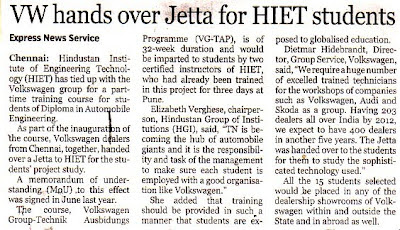
Hindustan Institute of Engineering Technology (HIET) in Chennai has been running polytechnic programs for years within a larger technical campus environment. That matters more than it sounds. When mechanical, automobile, computer and electrical disciplines operate under one structured system, students often benefit from shared infrastructure and technical culture that goes beyond a single classroom.
If you’re seriously considering a diploma in mechanical engineering, diploma in automobile engineering, diploma in computer engineering or diploma in electronics and electrical engineering, it makes sense to review the details directly rather than rely on summaries.
You can see the complete list of programs, eligibility information and course structure here:
https://www.hiet.in/polytechnic/courses-offered/
Spend a little time going through it. If possible, visit in person. Walk through the workshops. Ask how training is actually conducted.
A diploma shouldn’t feel like a backup plan.
It should feel like a deliberate start.