It’s a question that comes up a lot among students, usually somewhere between choosing a course and signing the admission form. If I study this in India, does it actually open doors internationally, or does the qualification stay useful only here?
For aviation and technical engineering graduates, the answer is more interesting than most people expect. But there are things worth understanding clearly before you start building a plan around it.
Why aviation travels well
Aviation is one of the few industries where technical standards are genuinely the same everywhere. The International Civil Aviation Organisation sets the framework. Countries build their licensing systems on top of it. That means an engineer trained in aircraft maintenance engineering in India, licensed through the DGCA, is working within a system that regulators in other countries can actually evaluate and recognise.
That’s not true of most fields. A marketing qualification, a management degree, even many engineering programmes, local context shapes how much they’re worth abroad. With aircraft maintenance, a turbine is a turbine. A hydraulic system works the same way whether the aircraft is sitting in Chennai or Dubai or Frankfurt.
This is why graduates from aircraft maintenance engineering colleges, particularly those who complete the full AME course requirements and hold DGCA licences have been finding work in the Gulf, Southeast Asia, and Europe for years. It’s not a guarantee, and it isn’t always quick. But the pathway is real, and it’s used regularly.
Where the jobs actually are
The Gulf is the most well-worn route. Emirates, Etihad, Qatar Airways, flydubai – all of them run large MRO (maintenance, repair, and overhaul) operations and hire regularly. Indian engineers and technicians have a strong track record there. Pay is competitive. The engineering standards match international benchmarks. For someone coming out of a solid aircraft maintenance engineering course with a valid licence, this is often the first serious option worth researching.
Southeast Asia is a different kind of opportunity. Singapore, Malaysia, and Thailand have quietly built into significant aerospace hubs over the last two decades. AirAsia, Singapore Airlines, and several independent MROs have major maintenance operations there. The region is still investing, which means hiring hasn’t plateaued.
Europe is harder to walk into directly. Most countries require DGCA credentials to be converted or validated before you can work independently, a process that takes time and isn’t trivial. But engineers who go through it properly end up with access to some of the most established employers in the world. The UK now operates under its own CAA rather than EASA, which adds another step, but it’s still a viable destination for experienced candidates.
Avionics is a different conversation
Students who take the avionics route through a B.Sc Avionics or a diploma in aircraft maintenance engineering (Avionics) are sitting in a stronger position than many of them realise. Avionics is genuinely skills-short across most aviation markets. The electronics in modern aircraft have grown more complex faster than the industry has been able to train people to work on them.
Specialists who understand navigation systems, flight management computers, integrated cockpit electronics… They’re in demand at MROs, airlines, and increasingly at aerospace manufacturers. The B.Sc Avionics pathway produces fewer graduates than the mechanical stream, which is actually part of why it translates so well internationally. Scarcity matters in hiring.
Technical diplomas go further than students think
Aviation tends to dominate these conversations. But it isn’t the only way out.
Germany, Canada, Australia, and the UK are all dealing with the same structural problem right now, which is a shortage of enough trained technical people. They’ve been importing engineering talent for years and the demand hasn’t softened. This creates real openings for graduates with solid practical training, not just paper qualifications.
A diploma in mechanical engineering, backed by genuine hands-on experience, opens doors in manufacturing, industrial maintenance, and automotive sectors abroad. Germany in particular has formal recognition pathways for Indian polytechnic graduates in certain states, it’s worth researching if that’s a direction you’re interested in.
A diploma in computer engineering crosses borders almost automatically especially in fields like hardware, networking, and systems. The Indian engineering reputation in tech is well established, and these skills don’t need much translation internationally.
A diploma in electronics and electrical engineering has consistent demand in the Gulf and across Southeast Asia, where infrastructure development keeps creating sustained need for electrical specialists. It’s not glamorous to say, but electrical work is everywhere and always needed.
A diploma in automobile engineering travels further than most students expect, especially now. The automotive industry globally is in mid-transformation with the advent of electric vehicles, advanced driver systems, complex onboard diagnostics, and the demand for technicians who understand vehicles at a hands-on level is growing, not shrinking.
What nobody tells you before you start planning
Most students who want to work abroad focus on the destination and skip the part that actually determines whether it happens.
The licence matters more than the degree.
For aviation, completing an aircraft maintenance engineering course through a DGCA-approved programme is step one. Getting the actual licence is what makes you employable internationally and not just the B.Sc or the diploma. A surprising number of graduates delay the licensing process after completing their studies. That delay is expensive when you’re trying to work abroad.
Two or three years of local experience changes everything.
Most international employers want documented hands-on work before they’ll seriously consider a foreign hire. Getting that experience first, even at lower pay, makes the international move significantly smoother. Graduates who skip this step often find the process much slower than they anticipated.
Where you train shapes what’s possible later
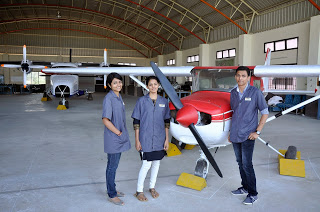
Students at aviation colleges in Chennai, and at institutions like Hindustan Institute of Engineering Technology specifically, tend to have something concrete going for them: training built around real equipment, actual airworthiness standards, and the kind of structured practical exposure that shows up differently on a CV than classroom-only programmes.
Aviation employers, whether they’re hiring in Chennai or Singapore or Dubai, can tell the difference between a graduate who’s worked on actual aircraft systems and one who’s studied about them. That distinction matters, and it starts at the aviation training institute you choose.
Whether the goal is the Gulf, Europe, or something closer to home, the foundation is the same. Training that’s actually worth something. A licence that holds up. And enough real experience behind you that the opportunity, when it comes, doesn’t slip through.