Picture this. A recruiter sits across from two candidates. Both studied at aircraft maintenance engineering colleges. Both passed the same exams. Both have the same degree printed on paper. But within five minutes, the recruiter knows which one is getting a callback, and which one isn’t.
So what just happened in those five minutes?
That’s the question worth sitting with, especially if you’re a student or a parent trying to figure out what aviation education in India should actually look like. We’ve spoken to hiring managers, MRO professionals, and airline training heads to understand exactly what they’re watching for. And honestly, some of it might surprise you.
It’s Not Just About Clearing the AME Exams
Every year, thousands of graduates pour out of aircraft maintenance engineering colleges across India, all armed with similar certificates and a similar set of answers to the standard interview questions. The ones who stand out aren’t necessarily the toppers. They’re the ones who’ve actually touched real aircraft, who can look at a hydraulic component and tell you something about it from experience, not just from a diagram on page 47 of a textbook.
Recruiters who visit an aviation institute in Chennai during campus drives are often remarkably direct about this. They’re not looking for someone who memorised the manual. They’re looking for someone who’s internalized what the manual means. There’s a real difference, and it shows up almost immediately when you put a fresher in a live maintenance environment.
The gap between theoretical knowledge and practical confidence is, by most accounts, the biggest frustration recruiters carry back from campus placements. Colleges that give students genuine hangar time, live component exposure, and structured troubleshooting practice produce graduates who hit the ground running.
Avionics Is Not Optional Anymore
A decade ago, a good mechanical grounding was enough to get your foot in the door. That world is gone. Modern commercial aircraft are extraordinarily complex systems where software and hardware are inseparable: fly-by-wire controls, integrated avionics suites, electronic flight management systems. The engineer who doesn’t understand this layer of aviation is working with one hand tied behind their back.
This is why candidates who’ve done a diploma in aircraft maintenance engineering avionics tend to walk into interviews with an edge that’s hard to manufacture. It’s not just the knowledge, it’s the signal. Avionics specialisation tells a recruiter that this person has been paying attention to where aviation is actually going. That counts for something.
If avionics is your stream, lean into it in every interview. Don’t just mention it, talk about what you worked on, what challenged you, what clicked. The specificity is what makes it real to the person sitting across from you.
The Stuff Nobody Teaches You (But Everyone Expects)
Here’s where it gets interesting. Ask most aviation students what skills a recruiter cares about, and they’ll give you a technical answer. Ask the recruiters themselves, and they’ll give you a very different list.
Communication comes up every single time. Aviation is a zero-error environment, and that environment depends entirely on clear, precise, timely communication. A maintenance engineer who can’t articulate a fault to a pilot, write up a snag log properly, or flag a concern to a supervisor without hesitation is a safety risk. Technical ability doesn’t cancel that out.
Beyond communication, experienced hiring managers look for a kind of professional composure, the ability to stay methodical under pressure, to own a mistake without falling apart, to work as part of a team without needing to be managed at every step. These aren’t traits you can fake in an interview. But they absolutely can be built, if your college environment demands them of you.
Safety Is a Culture, Not a Chapter
Every aviation student learns about DGCA regulations, EASA standards, and quality management systems. That’s table stakes. What separates graduates who’ve truly absorbed this training from those who’ve merely studied it is how naturally they speak about safety, whether it comes across as something they believe in or something they prepared answers for.
Students coming out of good B.Sc aircraft maintenance engineering colleges that treat safety as a living, breathing part of campus culture, rather than a module to clear, tend to carry themselves differently in interviews. Compliance doesn’t feel like a burden to them. It feels like the point. That mindset is visible, and recruiters can spot it quickly.
A useful question to ask yourself when evaluating a college: does safety come up in the hangar? In workshops? In everyday conversations with faculty? Or only in exam papers?
You Need to Be Comfortable in a Digital World
The aviation industry runs on data now. Maintenance tracking, fault logging, technical documentation, predictive maintenance systems fed by AI, none of this is futuristic anymore, it’s the current reality at most serious MRO operations and airlines. A graduate who’s uneasy with digital tools is going to struggle, regardless of how sound their mechanical knowledge is.
You don’t need to be a programmer. But you do need to be the kind of person who adapts quickly to new systems, who isn’t intimidated by software interfaces, and who understands that the aviation industry’s relationship with technology is only going to deepen. Recruiters watch for this adaptability. They can usually gauge it pretty quickly just from how someone describes their experience with digital documentation or maintenance software during training.
Get Out Before You Graduate
One of the most memorable things a recruiter said to us: “I can teach a graduate technically in six months. I cannot teach them to be a professional in thirty days.”
What he meant was, the instincts, the pace, the unspoken culture of working in aviation, those things come from exposure, not from a classroom. Students who’ve done meaningful internships, visited operational hangars, attended industry events, or found ways to spend real time around working aircraft arrive for placement interviews as different people. They carry themselves differently. They know how to read a room. They ask sharper questions.
If you’re studying at an aviation institute in Chennai right now, or anywhere in India, don’t wait for someone to arrange that exposure for you. Pursue it. The industry is more accessible than students realise, and the ones who make the effort to engage with it before graduation are, almost without exception, the ones recruiters call back.
Attitude Outlasts Everything Else
There’s a reason experienced recruiters keep coming back to this. They’ve seen it too many times: technically brilliant candidates who couldn’t last six months because they weren’t coachable, or genuinely enthusiastic candidates who grew into exceptional engineers because they were hungry to learn.
Aviation is a field that demands a certain kind of person. Not necessarily the smartest person in the room, but someone who takes the work seriously, who understands the weight of what they’re doing, who genuinely cares. That passion, when it’s real, is obvious from the moment someone opens their mouth. You can’t manufacture it for an interview.
Talk about what drew you to aviation. The moment it stopped being an idea and became something you wanted to build your life around. That story, told honestly, does more work in an interview than a polished list of technical competencies ever will.
Choosing the Right College Is Choosing Your Future
If you’re currently weighing options for B.Sc aircraft maintenance engineering colleges or deciding between a diploma in aircraft maintenance engineering avionics and a full degree programme, here’s a checklist worth spending time with:
Does the college have actual aircraft for hands-on training, not models, not diagrams, actual aircraft? Is the curriculum current, does it reflect where aviation is today, not where it was a decade ago? What companies come for placement, and where do graduates actually end up? Are there industry connections: guest sessions, internship pipelines, live project exposure? Is the faculty made up of people who’ve worked in the field, not just studied it? Is safety culture embedded in the day-to-day life of the college, or does it only appear in the syllabus?
No ranking list will answer these questions for you. You need to ask them directly, and trust what you observe when you visit.
Why HIET Thinks About This Differently
At Hindustan Institute of Engineering and Technology (HIET), these aren’t abstract questions. They’re the ones we asked ourselves when building our aviation programmes, and keep asking every time we review the curriculum or bring on faculty.
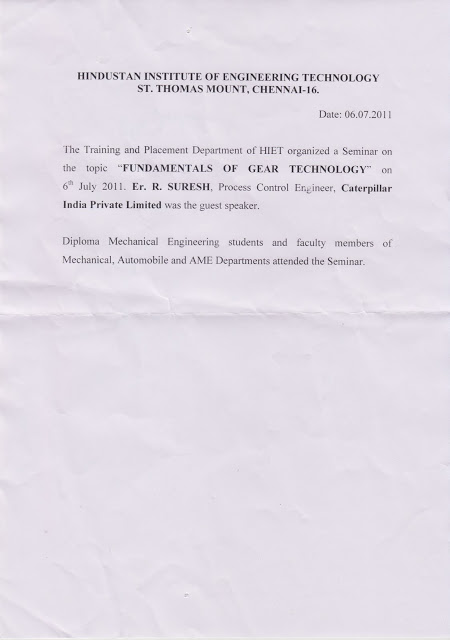
Our students work with real aircraft components. They’re taught by people who’ve spent years in active aviation roles. Our approach to safety isn’t a module, it shapes how the entire programme is run. And when it comes to placement, we measure ourselves not just by the number of students who get hired, but by where they go and how quickly they grow once they’re there.
Whether you’re exploring a diploma in aircraft maintenance engineering avionics or a full B.Sc in aircraft maintenance engineering, HIET is built around one honest goal: producing graduates who step into the industry ready, not just qualified. As one of the most established aircraft maintenance engineering colleges in Tamil Nadu, we’ve seen what the industry expects, and we’ve designed our programmes around exactly that.
Ready to take your first step into aviation? Connect with our admissions team and find out how HIET can help you become the graduate every recruiter is looking for.